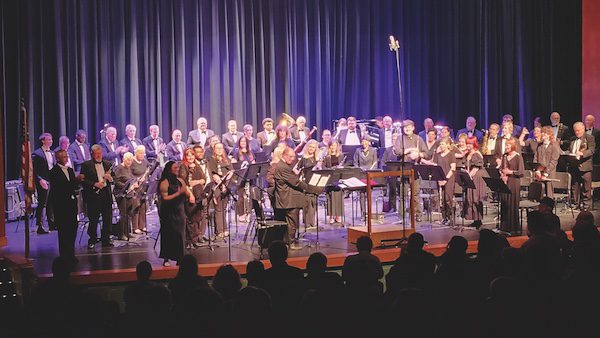
For its final concert of the 2025-2026 season, the 70 member Lowcountry Wind Symphony (LWS), directed by Donald F. Jemella presents ‘The Alpha and the Omega.’ The program features a wide selection of works composed by great masters as well as music based on traditional folk melodies.
When asked about the title, Music Director Jemella reflected, “I programmed music that I would love to conduct if this were the last concert in my life.” ‘The Alpha and The Omega’ refers to beginning the concert with Holst’s, ‘First Suite in E-flat for Military Band’ and ending with the ‘Largo’from Dvorak’s New World Symphony, featuring the familiar ‘Goin’ Home’ theme.
LWS is a concert band made up of amateur and professional brass, woodwind, and percussion players from the greater Beaufort area. The concerts are FREE, but donations are gratefully accepted.
‘The Alpha and The Omega’ will be performed at the following venues:
Friday, April 24, 2026 – 7 P. M.
Bluffton High School
12 H. E. Mc McCracken Circle,
Bluffton, SC 29910
Sunday, April 26, 2026 – 4 P. M.
Battery Creek High School
1 Blue Dolphin Drive
Beaufort, SC 29907
LWS chooses from among many genres of music, including compositions written for band as well as transcriptions of orchestral works. Here is a preview of the program:
First Suite in E-flat for Military Band by English composer, Gustav Holst was first performed in 1920 with its companion work, the Second Suite, reaching audiences in 1922. The three movements of the First Suite’ – Chaconne, Intermezzo, and March, are dynamic and energetic. They have stood the test of time, representing some of the finest offerings written for concert band, and remain popular selections on programs well into the twenty-first century.
Irish Tune from County Derry. Here, Percy Grainger has woven this familiar folk tune into a beautifully moving and heartfelt piece. Its melody is equally well known and oft performed by vocalists, especially Irish tenors, when it is known as ‘Danny Boy.”
Unfinished Symphony, (Schubert’s Symphony #8), is best known by its catchy nickname, suggesting that the composer had left something missing! Most symphonies are longer works with three or four movements. However, Schubert never commented on why this mysterious work contains only two movements. However, it is satisfyingly complete, innovative, and filled with incredibly lovely melodies. Its departure from the Classical era has led many to call it the first Romantic symphony.
Shenandoah – this familiar melody, also known as ‘Across the Wide Missouri,’ is of uncertain origin, dating to the early 19th century. It was a folk song sung by Canadian and American voyageurs, or fur traders, traveling down the Missouri River in canoes. By the mid 1800’s versions of the song had become a sea shanty, heard or sung by sailors in various parts of the world.
Elsa’s Procession to the Cathedral – is from Richard Wagner’s opera ‘Lohengrin.’ The mysterious Lohengrin, Keeper of the Holy Grail, arrives in disguise in Antwerp Belgium to rescue the city from barbaric invaders. Beautiful Elsa stands accused of murder, but is saved when Lohengrin speaks on her behalf and agrees to marry her. She is cautioned never to ask who he is, but then gives into temptation. Sadly,he must depart after revealing his true identity. Overwhelmed by grief, she expires. It is the age–old tale of love, secrecy, and loss.
Americans We is considered one of Bandmaster Henry Fillmore’s finest marches, which he frequently chose when conducting a program. He originally found it difficult to establish a suitable title. However, when it was published in 1929 it was called Americans We and was simply dedicated “To All of Us.”
Largo from Dvorak’s New World Symphony contains one of the best–known melodies in all symphonic repertoire – the ‘Goin’ Home’ theme from movement Number II. The work is formally titled Symphony # 9 in E minor. Dvorak traveled to America, planning to teach at the Julliard School in New York City. During his time in America (1892-1895) he became drawn to American folk music, especially what were then called Negro Spirituals, as well as Indian American songs. In the New World Symphony he did not use “authentic’ songs but composed his own based on the study of the source material.
The Lowcountry Wind Symphony welcomes new members at any time. Talented youth are also encouraged to join us. Auditions are not required. For more information or to become involved in band operations support please contact director@lowcountrywindsymphony.com or 843-304-0543.
We invite you to join us for ‘The Alpha and The Omega’ as together we continue ‘Exploring What’s Musically Possible.’ For more information about LWS, please visit our website at www.lowcountrywindsymphony.com